My main project in production (rather than in the research and resource acquirement phase) is a mob of orks primarily intended for use in Gorkamorka.
Gorkamorka is a Mad Max-esque post-apocalyptic bumper-car fest where everyone is an ork and therefore largely immune to incoming bullets. The plan is that this premise will provide much hilarity. Heres hoping 🙂
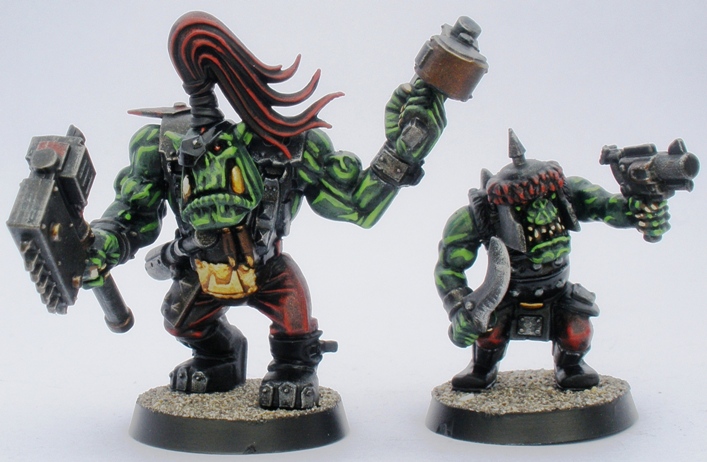
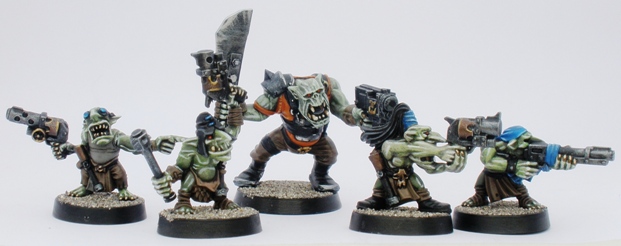
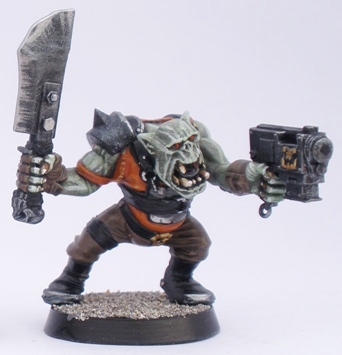
To that end I have bought some orks and added them to the other ork figures that I already had in storage. They are currently all in various states of WIP but the end results will look a lot like like the Bigdogz shown here.
A Nob and a Yoof
I spent some time working out a colour scheme and painting plan for these guys that would be both effective and easy to reproduce quickly. Details of that process can be found here and here.
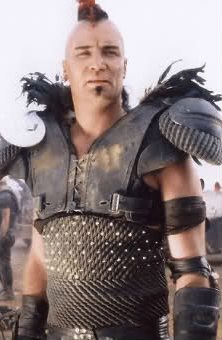
Suffice to say that a look that was reminiscent of Mad Max II was at the forefront of the process.
I have recently been painting orks again, primarily for use in a Gorkamorka weekend planned for the summer. I spent a bit of time deciding how to paint this new batch, trying to find a balance between speed and quality that suits me. I also wanted to make sure that the finished figures looked as I imagine them to look: inevitably slightly comical but mostly brutal and savage.
With all of this paint scheme and concept development going around in my head I thought that it would be a good time to take a look at the other ork/orc figures that I have painted over the years, starting with my first mob from the late eighties. If you can imagine Jason Donovan and Jive Bunny being in the charts then you will get a feel for the era. It may also make you suddenly need to go to the toilet.
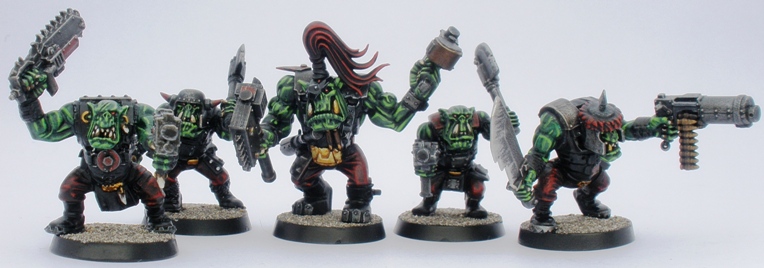
40k Orks -1989
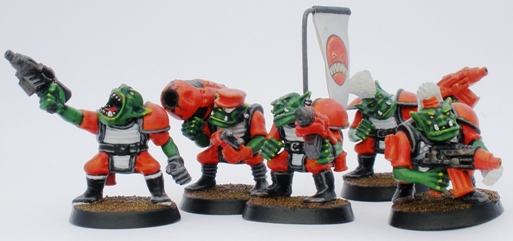
The Evil Sunz boyz above are from the first GW plastic ork kit. Quite primitive by todays standards, it was still a big deal back in those days. The ork Klans were a big part of the background then and each had their own dominant colour and look. Obviously the Evil Sunz chosen colour was red.
I painted the Evil Sunz mob in the same colour scheme as my 6mm Epic orks. As I had all the klans painted for use in Epic I had made some decisions regarding secondary colours for each of them at that point (extra important at that scale to distinguish the units). Thats why these guys have a lot of white in their outfits.
I went with quite a dark skin tone compared to the standards of the day. As everything that I painted back then had GW Goblin Green bases (I rebased the above guys recently, although I cant even remember doing it…) I thought that it would be better to use a darker colour for the base flesh tone.
Blood Bowl Orcs -1994
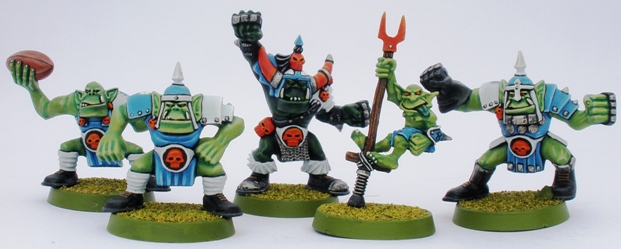
Five years later Chaka Demus and Pliers were oozing from the speakers in the shopping centre when I picked up a copy of Blood Bowl 3rd Edition. On a whim I decided to paint the orc team supplied, rather than the older BB figures that I still had knocking around unpainted. All of the models in the shot above are plastics from that box, with the exception of the metal goblin on the pogo stick.
I spent ages on these guys. I dont know if it is apparent from the photo above but I put many, many layers of wet blending into the skin tones (although the darker recesses do still look a bit “inky”).
At the time I was seeing if I could paint up a showcase project that displayed the highest level of painting that I was currently capable of. I think the fact that that particular team is still unfinished says a lot really: I dont have the patience to paint a lot of models in that way.
Ignoring the technically dodgier areas (the red in particular is poor) I dont think that the figures look that much better than if I had approached painting them in a faster and dirtier way anyway. As gaming pieces they could do with heavier contrasts that are visible at a few feet away (at a gaming distance, if you know what I mean). Generally I feel that that sort of contrast serves a gaming miniature better than carefully graduated highlighting.
The uniform chosen is particularly un-orky. Thats largely because I wanted to ensure that the figures looked like football players, rather than scruffy Warhammer Fantasy figures. Its still too clean and antiseptic looking though. I would approach painting an orc team very differently these days.
Gorkamorka/40k test figures - 2011
It would be a staggering seventeen years before this fatter, crankier and jaded painter sat down to paint another ork/orc. Thankfully I havent a notion about what music is in the charts (or even if there are charts) anymore, so the intervening years havent been all bad.
The figures above were an attempt to rationalise my ork painting process again. If the interim between orks has taught me anything its to Keep It Simple, Stupid.
So I did some research on quick ways to paint orks. The video tutorial below proved to be quite cool, although the finished product wasnt at a standard that I was happy with when I tried it. Its a pretty great way to get an army painted though, and I found that some of the techniques used inspired me to try some new things. Its worth a look if you have ten minutes.
So taking some elements from the above tutorial I sprayed the above batch white, washed the whole lot with the ubiquitous Devlan Mud and applied the base skin colour as a mix of paint and ink. This translucent layer let the shading from the Devlan show through it, although it did mean that the base flesh colour was a bit patchy. This generally got easily camouflaged with the simple one stage Game Color Off White highlight though.
The final result is ok. The skin is quite pasty, somewhat reminiscent of my Patient Zombies, which isnt to everyones taste for orks, but I dont mind it. Two things made me decide to abandon this colour scheme and painting technique though: 1) it was a little more time consuming and fiddly than I was hoping it to be and 2) the orks didnt look as gritty, threatening or Mad Max II for my liking.
Gorkamorka/40k Orks - 2011
So I tried a completely new approach again and got a look that I am happy with.
If you will excuse the brief lapse into GW Orkspeak “Da Bigdogz” above came out to a level that pleases me, but without taking so much time that I will never get the project finished. I worked up from a black undercoat with mainly drybrushed base coats followed by one layered highlight. The metal areas got a few washes too as I like the way that it makes the metal areas appropriately dull.
These guys are a few from amongst the first that I have finished. I have thirteen sitting complete in the miniatures cabinet at the time of writing which at least means that I am able to get through them reasonably quickly. Thats a good thing too as I have another thirty or so figures that I want to paint before I finish up with the orks.
The paint scheme has the high contrast that I favour with gaming figures these days. Although close inspection will reveal errors and hasty shortcuts the payoff of the quick turnover is worth it to me. The Bigdogz also look sufficiently Mad Max for my current tastes so I regard the project as quite successful so far. There will be more Bigdogz going up in more detail here over the next while.
Thats my potted history of ork painting done. Over twenty-five years condensed into one page, and at no extra cost to you the reader either.
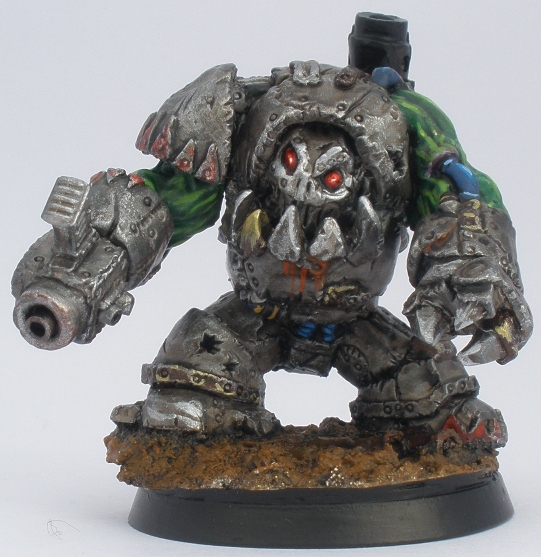
I finished this figure while tipsy in front of the TV last night. I am currently experimenting with different ways to paint ork flesh, hence the forty shades of green thing. How that for a tenuous link to St Patricks day?
The figure is Gorillagon from Ramshackle Games. I bought it to serve as a “Da Krusher”, a special character from Gorkamorka who has had so much bionik work done to him that nobody knows who he really is anymore, least of all Da Krusher. This of course leads to a number of screwy rules relating to the models effectiveness in-game. Hopefully much hilarity will ensue.
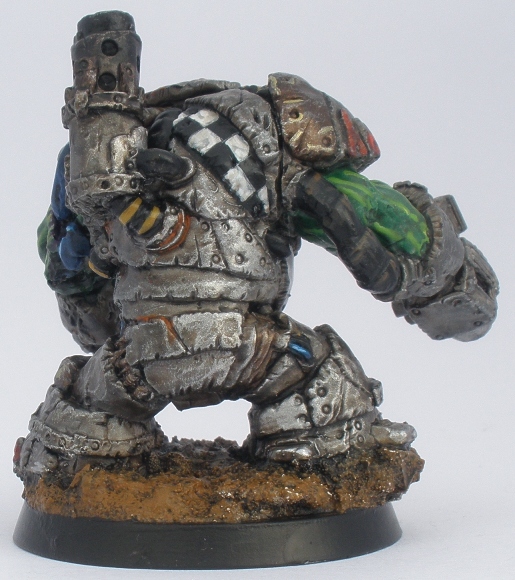
I modified the model slightly during assembly. I added a slightly smaller gun barrel into the soup-can calibre weapon in his right arm. I also added a top mounted magazine from another ork weapon, as it looked a little too much like some oddball energy weapon without it. I didnt do very much work to the gun though. In-game it isnt that special (Krusher is a close combat type mainly) and I didnt want the gun to be misleading.
+BEEP+ +BEEP+ THIS ORK IS REVERSING +BEEP+ +BEEP+
As befits the characters solo status I didnt tie its colour scheme to any faction of orks that I am currently painting. I did however try to paint the largely metallic looking model from a white undercoat. Generally I would approach a model like this by spraying it black and drybrushing it with metallic paints. This time I sprayed it white and alternated drybrushing of metallics with ink washes. I did this in the hope that I would end up with defined looking metallic areas but that the figure would not look too dark overall.
Also worth noting is that I didnt bother even to highlight some of the cabling and other detail, all in the interests of getting the figure finished so that I can get working on some more stuff. I will let you be the judge of whether I got the balance right or not.
As regular readers may know I am currently experimenting with quick ways to paint ork flesh. I tried another approach with this figure. I like some of how the green areas worked out, but as usual other elements of it irritate me. This is compounded somewhat by the fact that the organic areas of the figure are not brilliantly sculpted, so that the huge arms look a little like green tree bark or something now. On the plus side, I do think that it will look much better on models with better sculpted physiques (like the plastic ork figures). So I will go in that direction with my next batch or orks.
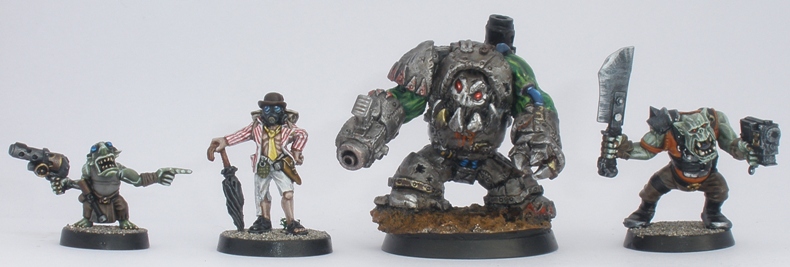
Finally here is a picture of da Krusher standing alongside a gretchin, a human and an ork, just so that you can see that he really is a pretty big monstrosity. He also looks sort of sad I think, like he really just wants be friends, like in a sappy Disney movie.
Right, I am off to shatter a national stereotype by spending the day drinking cheap Chilean Cabernet Sauvignon instead of stout. “An bhfuil tú ar meisce fós?” and all that “top o’ the mornin” jazz.
EDIT 21/03/11: I forgot to note in the the post that Da Krusher is supposed to have a pair of Steel Horns. In game terms these make him more effective when charging into combat. I considered adding a pair to the model during assembly, but I thought that they would spoil the brutal, rounded shape of the figure, so I scrapped that idea. Presumably the incarnation of Da Krusher above charges teeth first into his opponents, with much the same effect as a pair of horns. Just in case that sort of thing bothers you.
Gorkamorka is a skirmish game system that GW brought out in 1997. It has very similar mechanics to Necromunda but with the notable addition of vehicle rules that involve a little bit of risk management and a lot of shouting “Yahtzee!”
The game is strongly influenced by Mad Max II: The Road Warrior, except that instead of featuring Mel Gibson, actors from A Country Practice and pervert biker rapists it features orks.
Gorkamorka occurred during an awkward adolescence for orkoid development in 40K. As a concept they had lost their way at some point before Gorkamorka was released, becoming gaudy buffoons rather than a proper barbaric menace.
Although Gorkamorka definitely didnt wipe that image out (I mean the game is called Gorkamorka for crying out loud), it certainly laid the groundwork for the single-minded, homicidal galactic plague that they became in 40k the 2000s (and which they seem to be moving away from again these days). A lot of that was simply due to the top class miniatures sculpted by Brian Nelson for the GoMo range which took them from comical to monstrous.
As a GW fanboy I bought GoMo (as it seems to be called online these days) when it came out. It sounded like fun and I had enjoyed Necromunda, which was largely an identical system.
Unfortunately at the time I didnt have many opponents willing to get into GoMo so it didnt get much table time, just an afternoon or two. I bought some of the GoMo miniatures back then but they stayed in storage, until I sold on all of the orks to pay for a weekend boozing and clubbing in 2000. It was the right decision at the time. At least I kept the Mutie figures.
Zip forward a decade and MT, SOS and I have a weekend of GoMo planned for June. I dont play 40K any more, MT plays a teeny, weeny bit and SOS is getting back on the 40K scene having played in a weekend long tournament in January, which included painting even more Orks for his already vast, epoch spanning greenskin collection.
We all have a lot of 40k (and other games) under our belts and we are all pretty familiar with the basics of the GoMo system. SOS already has enough miniatures assembled and painted to field numerous mobs. I have existing suitable terrain and the enthusiasm to make some more (like the ongoing Fort Grayskull and the recent Foam Rocks). I am also looking forward to painting some of the nice ork figures that have come out in the last twelve years or so.
Somewhat uncharacteristically, MT is a bit of a wild card this time. Often he is more reliable when it comes to getting a project finished for a deadline than SOS. This time SOS has more than enough models ready to go before he starts and MT is in a something of a painting slump (a familiar thing to most figure painters I think).
Even if MT doesnt get his mob painted (it looks like even odds to me right now) he will still be able to use SOS spare figs so it looks like the project will materialise fully. Hopefully MT will get to play with figures that he has done himself though. He has had a Space Marine Land Speeder with wheels added to it knocking around for nearly a decade. That really should get its time in the sun and if not now then when?
The GoMo rules system is familiar and will be quicker to play than Necromunda (its less fiddly for a few reasons). We have also agreed on a handful of very straightforward streamlining house rules. They should hopefully help us to get enough games in to watch our mobs gain skills and the like and for us to experience the over the top and hopefully entertaining intra-game Gorkamorka elements (visiting dodgy car mechanics and over enthusiastic doctors with a penchant for amputation).
All of this means that many of the hurdles often encountered when we try to get some gaming off the ground have already been passed. Hopefully that means that we can concentrate on having fun rather than on rules intricacies or other tedious slog and just have a few giggles.
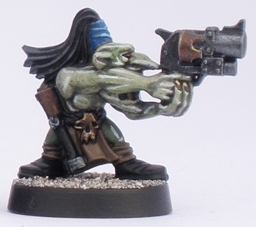
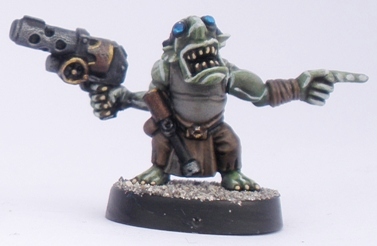
That in turn means that barring something serious that some GoMo will definitely be played this summer. So I will be putting my progress on it up here for the foreseeable future, starting with the as yet unnamed ork and his gretchin buddies above. Here is a picture of one of the grots standing in the mine entrance part of the Fort Grayskull project next to a Copplestone figure (Dr Leghorn), for scale.
In the interests of getting the project finished in a reasonable timeframe the ork and gretchin were painted quickly, with some areas getting simply a base coat and a wash. Not too bad as a prototype models I think, but I have decided to try a different approach overall. More on that at a later date.
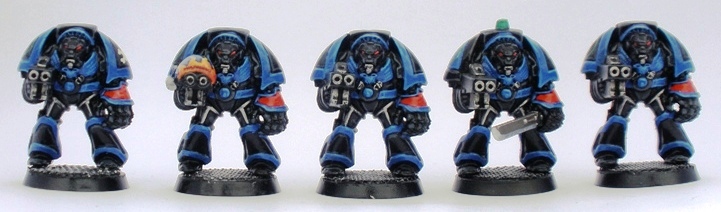
I found these figures in the attic of a relatives house last summer. I painted them while I was living there back in 1990 or so when I was fifteen. They are painted to match the colour scheme of my first Space Marine army.
The miniatures are the same seriously dodgy Terminators that were supplied with the original Space Hulk box. The figures are undeniably clunky, but have a very functional charm as gaming pieces, from my nostalgia ridden perspective at least. Being as devoid of animation as they are, they are as obviously boardgame pieces as something like the top hat from Monopoly or even a pawn from a cheap set of Snakes and Ladders.
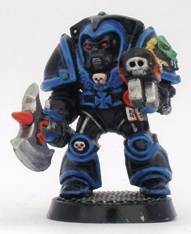
I also found a painted Terminator Librarian from the Deathwing supplement. Another goofy early GW plastic.
I got a kick out of finding these figures and I dusted them off ready for a game of Space Hulk or Advanced Space Crusade or something similar in the future. While the paint jobs are a scary twenty years old, they are perfectly fine for gaming with.
Funnily enough when I traded on Boardgamegeek for a set of 2nd edition Space Hulk back in 2008 I painted up another batch of the same sculpts, visible here and here.
At the time I was going through a sort of minimalist phase in my figure painting and I was trying to see the smallest amount of work required to do to a figure to get it finished well enough to game with. This was mainly in an effort to try to make a serious dent in the lead and plastic mountain and to get some projects (like Space Hulk, Mutant Chronicles: Siege of the Citadel and Descent: Journeys in the Dark) finished for once, at the expense of paint job quality. I found it curious to compare the figures painted in 2008 with the same figures painted eighteen years earlier.
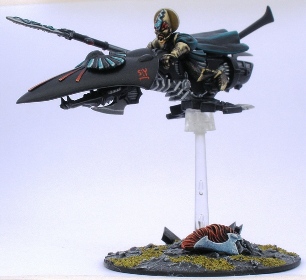
Todays figure from the vaults is the leader of the Eldar army that I painted in 2002, the Eldar from the Iacon fleet.
The army was made from GW parts from a variety of sources but mainly from a mix of Eldar and Dark Eldar parts. At the time I played using the army chosen from a Craftworld Eldar list, but I wanted to be able to field the figures as Dark Eldar if desired too, even though I never did in the end.
The background for the army plonked the Iaconian Eldar somewhere between the Craftworld Eldar and the Dark Eldar in philosophy. The idea was that rather than base themselves in a craftworld after The Fall, that the Iacon fleet had assembled for safety in numbers. As a result the fleet contained ships of many sizes along with occupants with their own agendas. Obviously this was loosely based on the concept of Battlestar Galactica, although the remake wasnt around at the time.
Another influence was a vaguely Egyptian theme, mostly added so that I could tie the figures to some cheesy decorations that I had been collecting with a magazine around then (visible in a game here). It also helped to focus me on some of the visual elements of the army such as colour and some of the decoration. Everyone is familiar with the concept of “Space Egypt” anyway due to Stargate. Funnily enough I didnt like the Stargate show (because it is shite), although the look of the tech in the movie was cool.
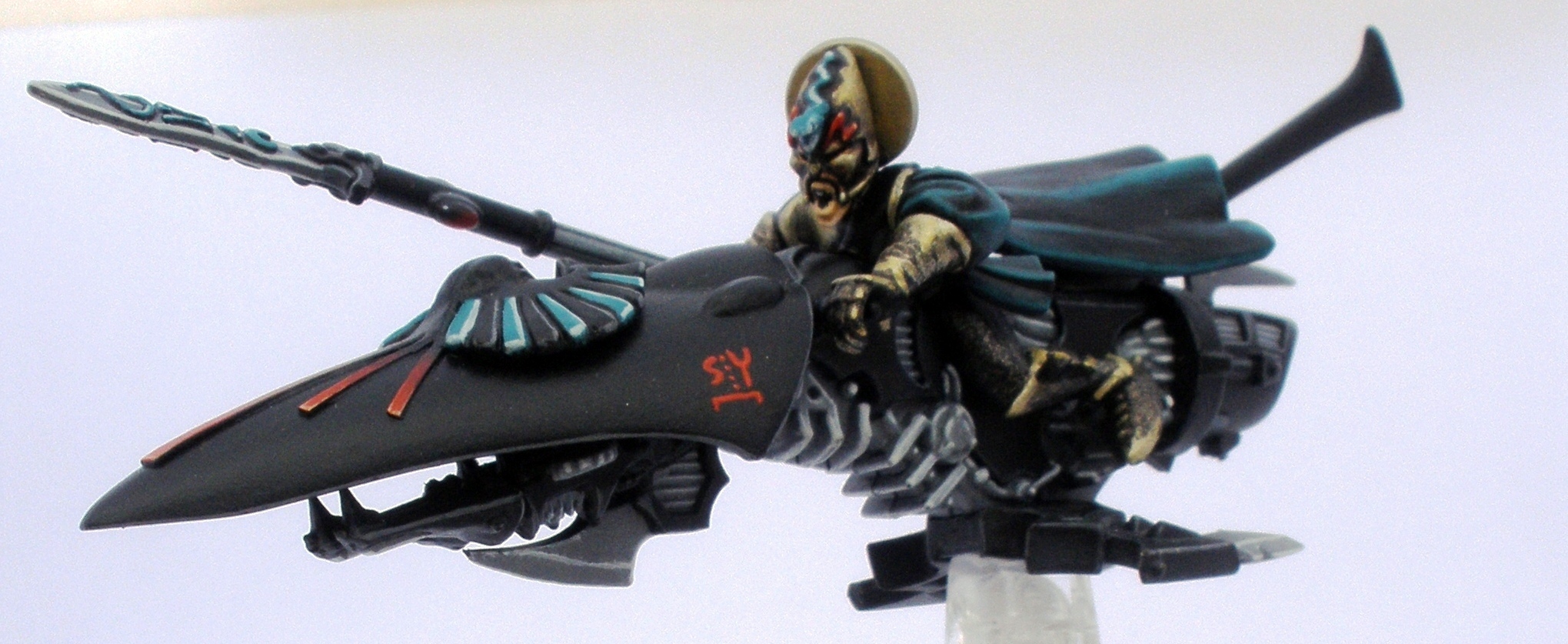
Farseer/Archon Yuminor
Yuminor above is assembled exclusively from plastic parts: Dark Eldar and Craftworld Eldar jetbikes, High Elf arms, a modified pair of High Elf spears, Dark Elf torso and helmet, a bit from a Falcon grav tank, some old shuriken catapults, some styrene strips and a Bretonnian helmet crest. I think that the cape is High Elf too, but it might be from a Chaos Warrior, I cant remember.
The circular thing stuck to the back of Yuminors head is a part of a Falcon kit. It is supposed to tie in with circular gold Egyptian decorative elements that were used to venerate Ra, representing the sun. The piece of plastic that I used was just a bit too thick and so looks a little odd (or maybe just a little bit foreign and alien if I am feeling charitable).
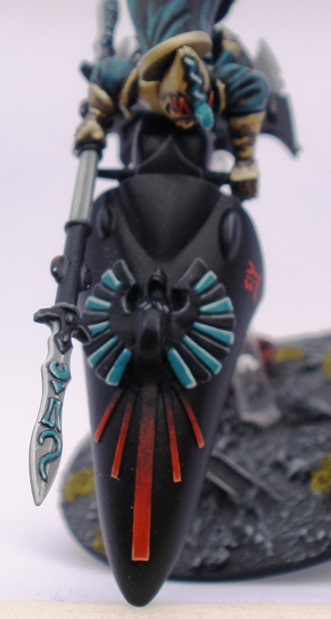
Jetbike Canopy & Singing Spear Detail
Just about visible in the shot above and easier to see in the photo above it is the hand painted glyph in the side of the canopy. Each unit in the army has their own unique glyph inspired by both the existing Eldar look and Egyptian heiroglyphs. Obviously they dont mean something specific or anything like that but they do give a nice element of detail on the figures, Yuminor included. I find that one area on a miniature brought to fine detail like that can help to give a sense of scale to figures. When it works the figures start to look a little less toy-like and just a little more real (as far as space elf sorcerers on jetbikes look real, but you know what I mean).
Another element that I carried through the larger models in the army was a phoenix-y bird type motif. The main reason that I did that was because there was a suitable crest on the High Elf sprues that I had in sufficient numbers to put on all of the vehicles that I had planned for the army. The bird on the jetbike canopy above however is a Bretonnian knghts helmet crest with some styrene strips making a sort of tail. That shot also shows the High Elf Spear which I made double ended because I think that it looks good like that. It also looks a bit like Prince Nuadas spear from Hellboy II now that I look at it. That cant be a bad thing.
The Entire Model
I like this model a lot even though as I mentioned in a previous Iacon post the paint scheme was laborious in its execution. Still, Yuminor (name inspired by a character from the super cool Ulysses 31 cartoon) is one of my better examples of a unique figure used to represent an army leader. Yuminors career didnt have the same gaming span as my Nurgle Chaos Lord but he still stands as one of the better examples from my own corner of the hobby.
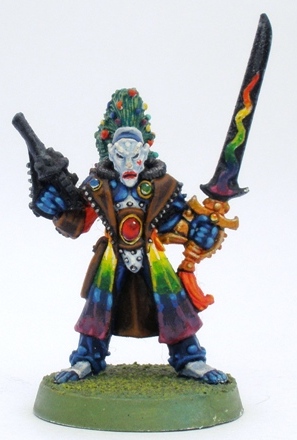
I painted this guy up in 1993, when I was seventeen. The paint job is far from perfect but it is still good enough for me to be quite happy to use the figure in any of my games that require it.
Harlequin Troupe Leader
As my Harlequin project never got any further than that Troupe Leader (or High Avatar as it was called back then) I still have a few lovely old Harlequin figures knocking around that tempt me from time to time. If I do get around to painting them I may tie the scheme in to resonate with this figure in some way, just for fun
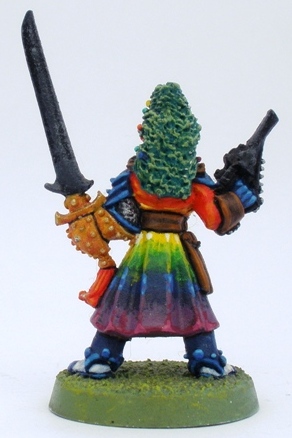
I will probably avoid copying the hairdo that looks like a decorated Xmas tree though, I am not so keen on that. It does however make the figure a little more appropriate for an Xmas post.
Festive Head
I hope that all of you guys get the nerdy stuff that you want under the tree this year.
Using the last game for rules of thumb we decided to throw points values out of the window. We then tweaked the scenario to represent the disruption by Harlequins of a daemonic summoning ritual by the Sin-Eaters.
The main reason for that scenario was that I wanted to use some of the daemon and other miniatures that I painted for the army years ago that never proved viable enough for regular play. It is always fun going back to play with figures that were fun to paint that never got much table time for whatever reason.
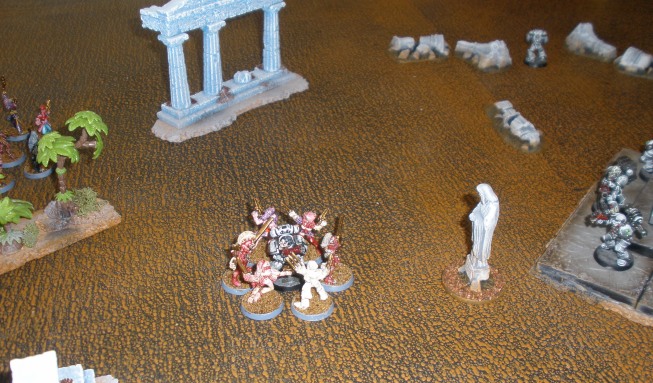
GAME 3: Harlequins Vs Sin Eaters Chaos Space Marines
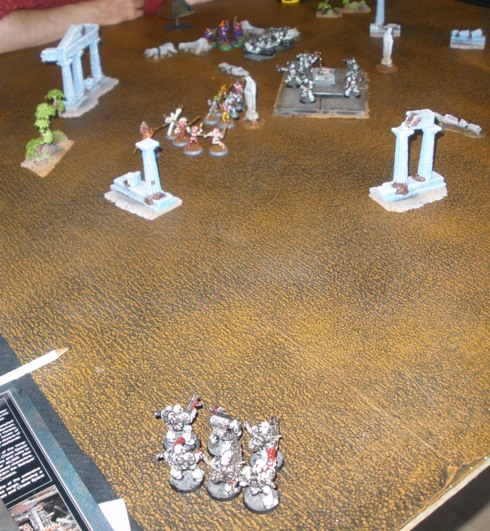
We set up as above but doubled the number of sentries as the Harlequins had too easy a time avoiding them in the previous game.
Nonetheless two troupes made short work of the sentries on the Western side.
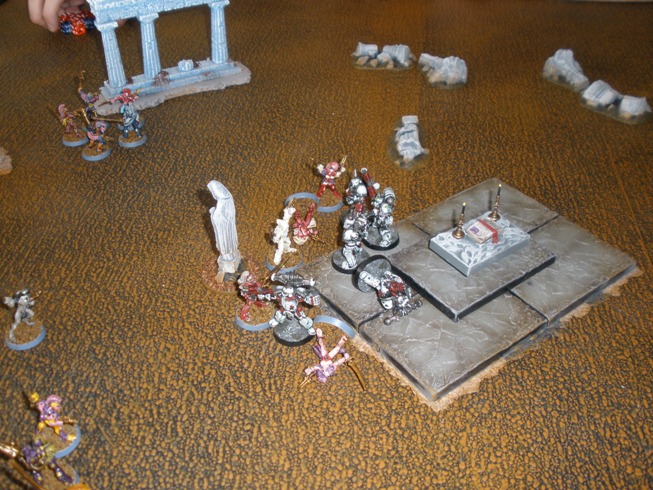
That didnt slow down the summoning ritual though. Swarms of Nurglings and and a group of Plaguebearers poured through the rift that was being opened by the Plague Marines. Sin-Eaters Bikers also came in from the East in support.
Nurglings swarmed over one squad of Harlequins, catching them unawares and killing them unexpectedly. The fight between the Plaguebearers and the second troupe caused casualties on both sides.
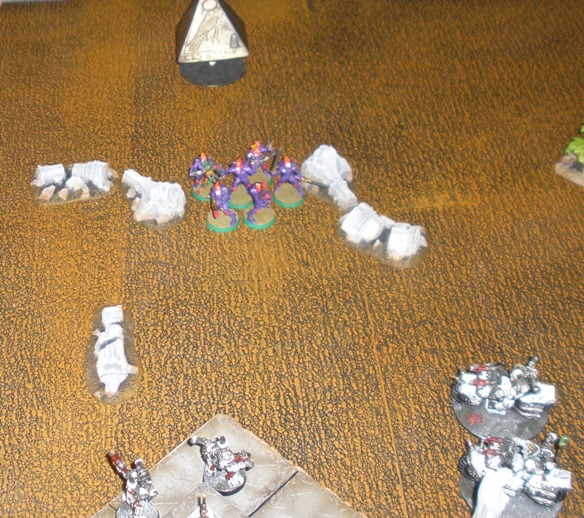
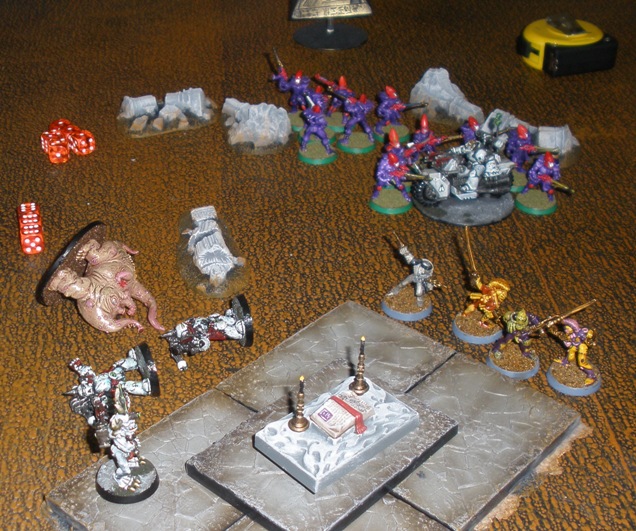
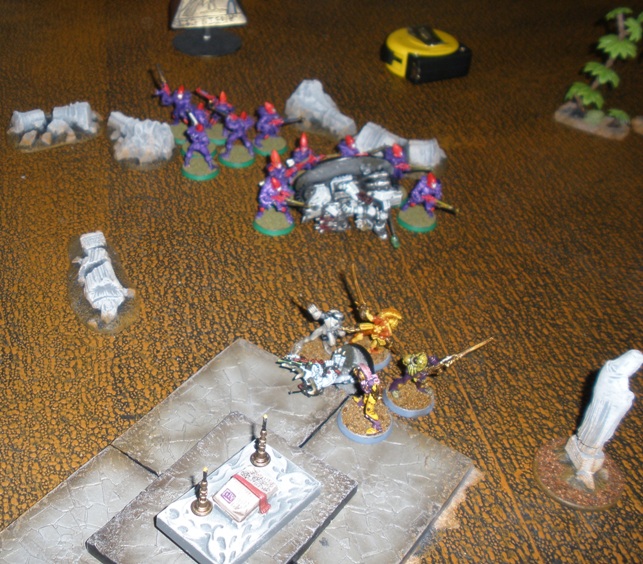
Eldar Guardians from the Kouranaya Craftworld stepped through their webway portal (the tacky looking golden pyramid) to support the Harlequins. The Sin Eater bikers adjusted to an intercept course.
Tough as they were the Plaguebearers were finding it difficult to withstand the repeated hit and run attacks from the Harlequin troupe. The Nurglings unexpected run of luck didnt hold and a fully expected obliteration occurred at the hands of the third troupe.
Sin Eater Havocs moved in from the South West and deployed their heavy weapons to cover the altar.
A solitary Plaguebearer was all that remained of the unit as the troupe disengaged ready to charge in again.
The armoured bikers were too tough for the guardians who were wiped out after a protracted fight.
More Guardians came through the Webway portal just as the Bikers finished off the first Guardian squad while the surviving Harlequins circled the altar ready to assault.
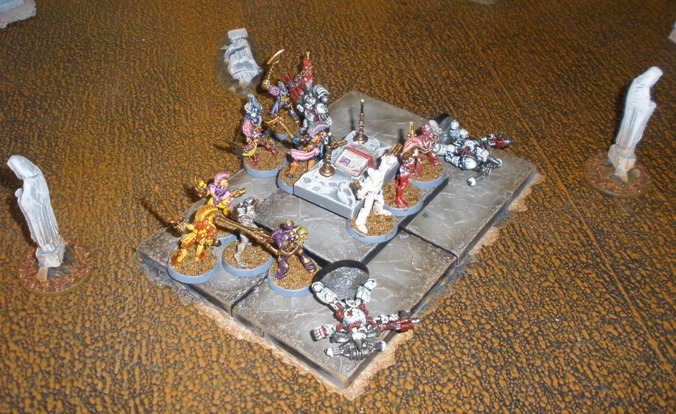
With heavy casualties on both sides the Harlequins nearly dislodge the Plague Marines from the altar…
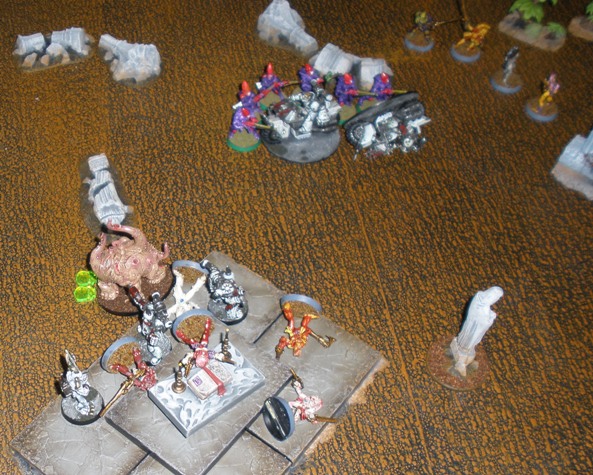
…but a Chaos Spawn congeals out of nowhere and lands behind the surviving troupe. It looks bad for the Eldar.
The Harlequins on the altar are killed by the remaining Plague Marines, Chaos Spawn and solitary Plaguebearer. The Harlequins backflip out of combat with the bikers as the guardians kill another, leaving only the Sergeant.
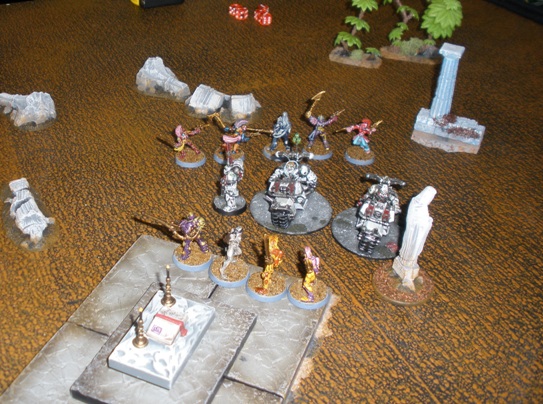
This frees up the last Harlequin troupe to rush back towards the altar. Unexpected supporting fire from the final Guardian squad that just warped in proves lethal in combination with the Harlequins sidearms.
The Guardians finally tear the biker sergeant from his saddle and riddle him with close range shuriken fire while the remnants of the last troupe send the final daemon back to the hole that spawned him. Bloody but victorious the Eldar prepare to set explosives and counter wards to ensure that the altar can never be used again.
————————————-
Conclusions:
Although at this stage we were tiring of our trip down 40k memory lane, with all of its dead ends and turn offs that go nowhere and for no real reason, that game ended up being quite fun, if a bit linear and predictable. It was close in the end and it was evocative of the source material. That is the most that we could have hoped for in fairness.
There was only a little bit of vague information about Eldar Pirates in the Rogue Trader book before White Dwarf 127 brought in swathes of background and info regarding the Craftworld Eldar. Before that the only Eldar worth talking about were the Harlequins.
Last year MT painted up a bunch of Harlequins that he had traded with me years ago which were last seen in a Space Hulk here. Despite how cool the original Harlequin stuff was back in the day neither of us had been involved in a game using them (apart from a few abortive attempts to use the silly Harlequin list from the Citadel Journal circa 2001).
The current Eldar Codex and the new Dark Eldar Codex both have rules for Harlequin Squads that looked good to us. It seemed like GW had finally got the Harlequin power level right: stylish and effective rather than bland and ineffectual (Eldar Codices 1 and 2) and playable rather than broken (Citadel Journal Harlequin list). So we were pleased to be able to finally play a game of 40K with them so many years later.
GAME 2: Sin Eaters Vs Unknown Harlequin Troupe
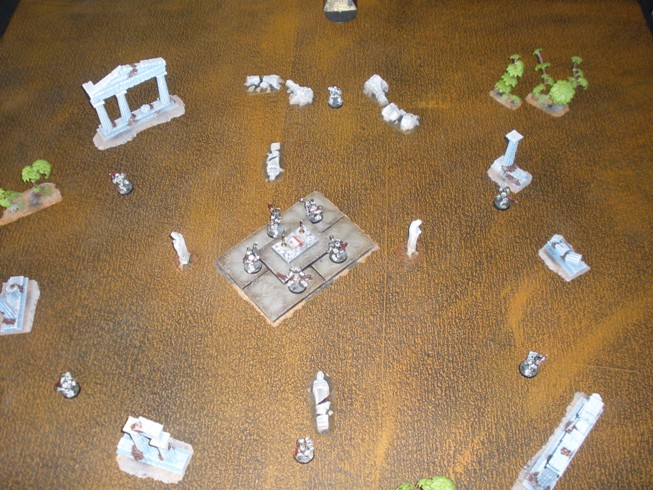
We set up an Altar of eeevil in the middle of the table with Sin-Eaters holding it and four Chaos Marine sentries surrounding them. We decided to play a second, more involved scenario with daemon summoning etc after this one, once we had an idea of how well the Harlequins functioned. This game was to be all about how the Cosmic Elf Ninja Clowns work in their current form.
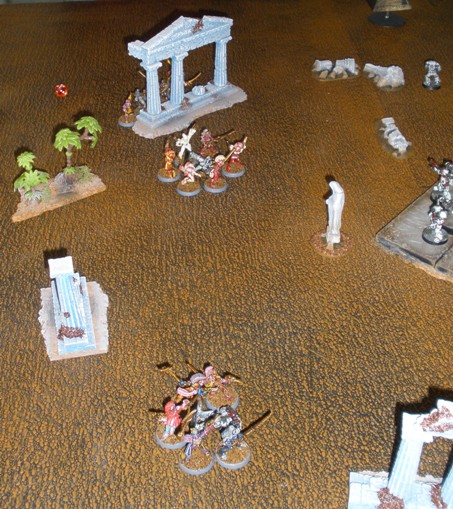
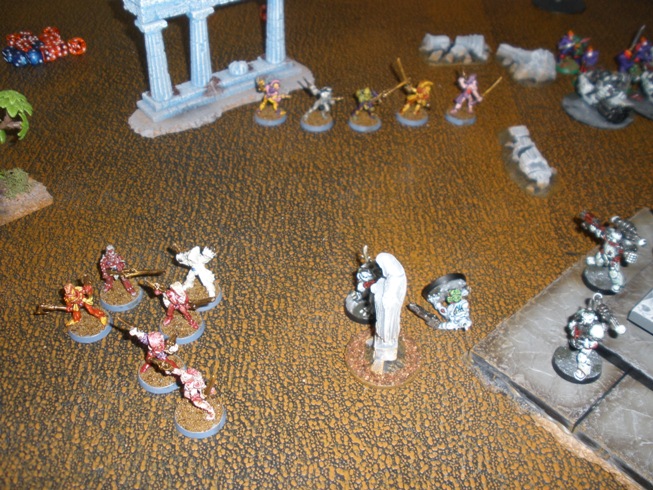
The Troupe started off on the Western edge.
With all of the panache that one would expect from a group of almost immortal space ninja elves devoted to a god of violent deception, a pair of Chaos Marine sentries were silently bumped off.
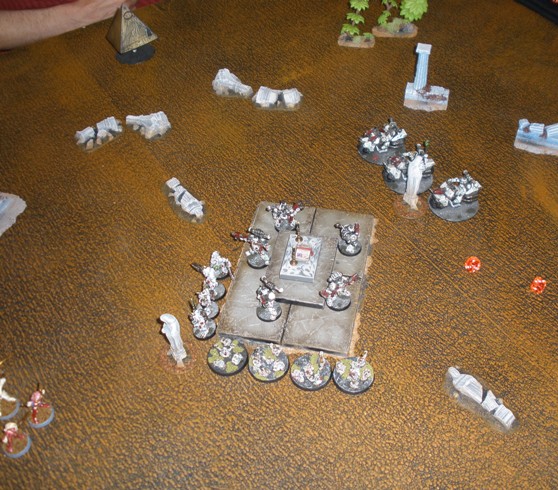
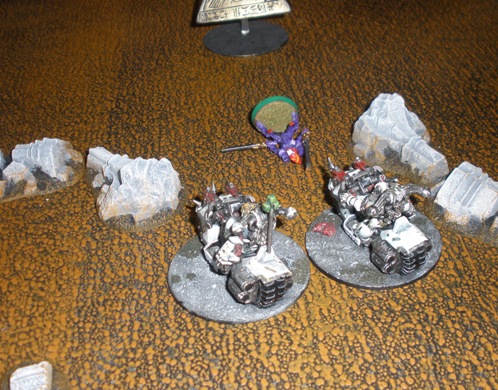
A trio of Sin-Eater bikers rush in from the East in response.
The irresistible force of the Harlequins meets the immovable object of the Plague Marines. Something had to give.
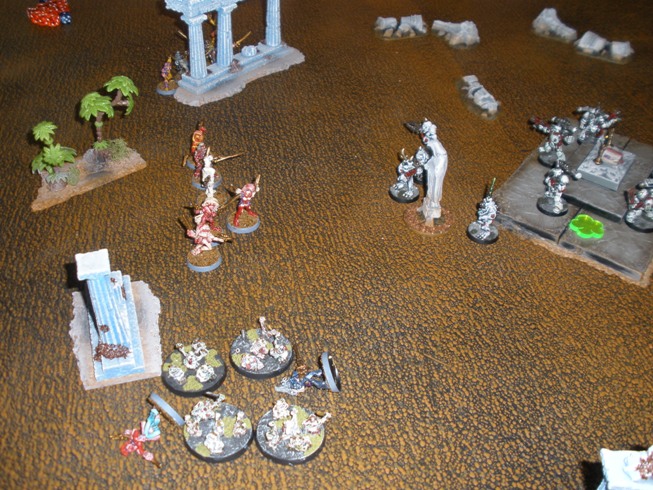
It turned out that the Plague Marines caved to the flurry of attacks brought about by the Harlequin ability to Hit and Run. Say what you like about 40k, but it felt just right, one of the rare marriages of the background and the game mechanics in action.
The last Plague Marine regrouped with the depleted biker squad, but the fight was gone out of them. Their indistinct would-be assassins encircled.
The last of the Chaos forces were wiped out and the Harlequins won by a large margin.
————————-
Conclusions: Already a number of the tried and utterly untrusted mechanisms of 40k were starting to wear thin. We glossed over these with the wave of our hands and the application of hazily remembered other rules from the various editions of the system over the years. This kept the game going, but obviously wasnt ideal. Also the IGo/UGo nature of the game felt scripted and dull.
On the plus side it was nice to play with Harlequins that felt like how we thought that they should feel after all these years (thin and muscley with an excellent skincare regime in case you were wondering).
Digging out older figures that havent seen the light of day for a while (like the Sin Eaters) for a game is always a little bit of a kick. The fight between the Harlequins and the Plague Marines on the altar was evocative because of the thinly applied setting/scenario and because the rules actually helped the events to feel authentic. This is a main goal for me with miniature games so that was a big plus.
I have had a love/hate relationship with Warhammer 40000 since 1989.
Although I played a lot of games in that setting for years, I finally put it to one side in the mid 2000s. I stopped reading White Dwarf, stopped buying Codices and stopped painting 40K figures. I love the daft futuristic dark age setting but the games themselves extremely rarely lived up to the potential set by the background and so, that was that.
To make a long story short-ish, a few factors combined recently (namely the Horus Heresy series of novels, the totally unsuspected GW re-release of Space Hulk and the Fantasy Flight Warhammer/40K themed boardgames etc) that gradually worked on my subconscious to the point that I planned a gaming weekend with the main emphasis being on playing some small (400-600pt) games of 40K. I guarantee that I am more surprised at this than you may be.
Despite my 180 degree turnaround on earlier standpoints regarding my willingness to play games of 40K at all, I still wasn’t prepared to play the rules as they are currently written. Long time game co-conspirator MT and I decided to play using a hodge-podge version of the rules based mostly on our favourite 3rd edition, except where we didn’t want to because we felt that newer rules were better. None of the rules selected as “better” were written down in advance.
Needless to say, that made this is an imprecise art, best only attempted by players that have successfully played the game together for a long time and who are not obsessed with trying to screw each other over. I decided to play with MT anyway (thats a joke, geddit?) Despite the fact that “jamming” with rules sets isn’t really our scene and the high potential for friction it worked out for us for these games.
We mostly played scenario heavy games, rather than the line-them-up-and-knock-them-down dice fests that 40K is infamous for.
This short series will document a small number of those games, mostly pictorially.
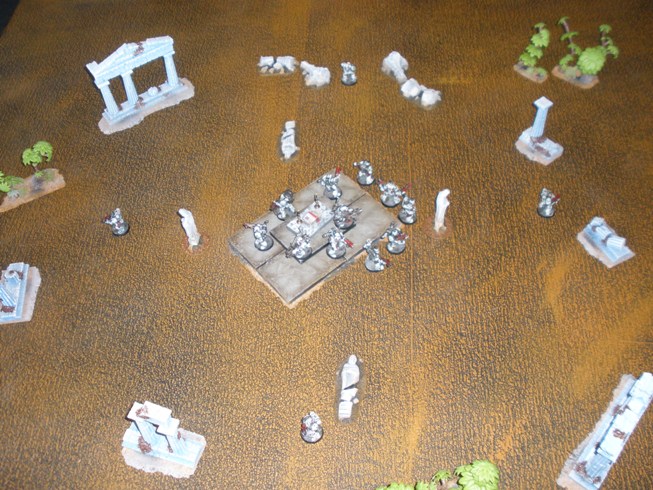
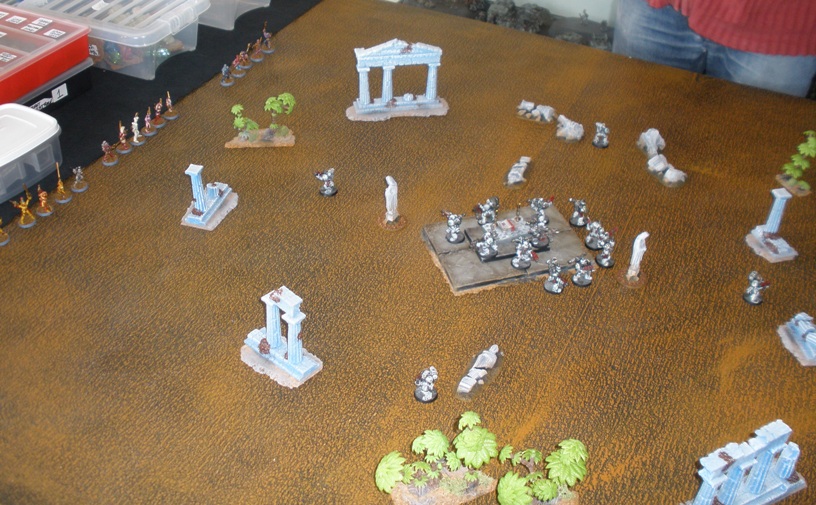
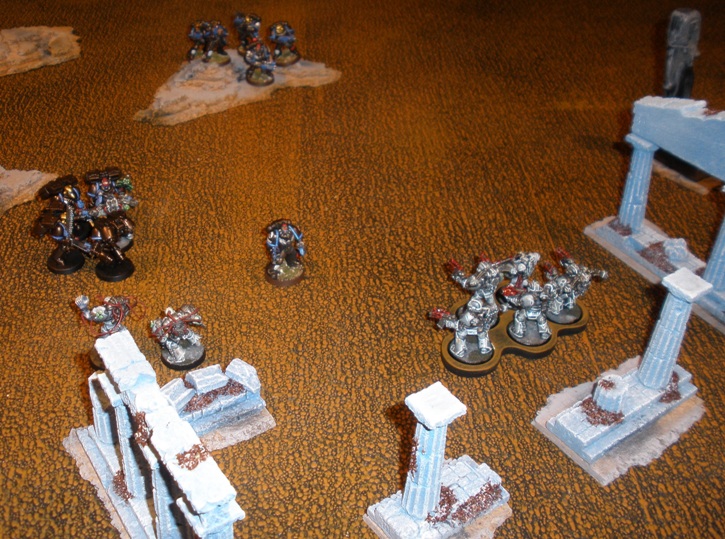
As this was the first game that I had played for a very long time we decided to go with a quick scenario-less game first of all.
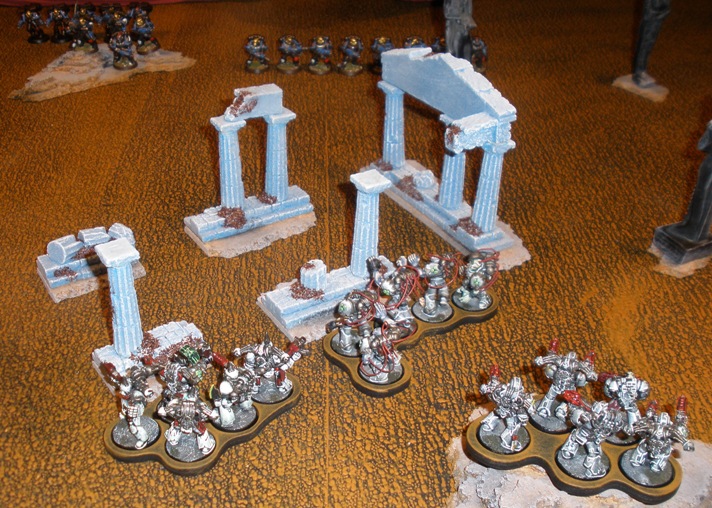
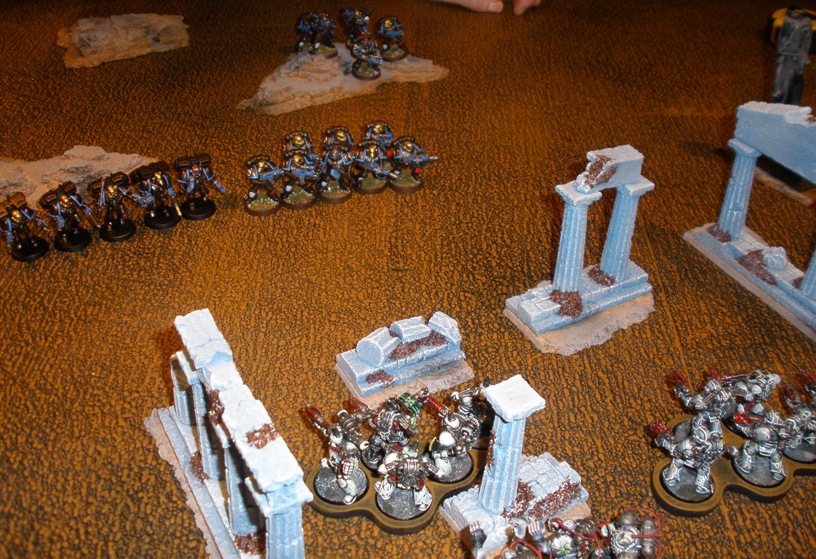
Unsurprisingly both sides moved towards the middle, with the exception of the Emperors Voice Devastator squad who too the high ground in their deployment zone. So far, so predictable.
The Sin Eaters Plague Marine Squad Klaus and Possessed Squad Nemesis along with Squad Van Helden took cover in the ruined temple.
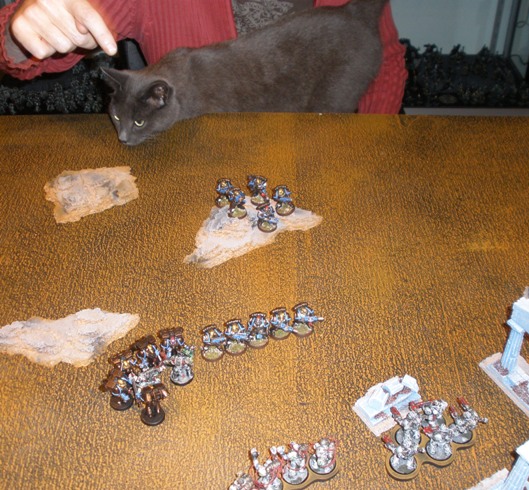
Plum the cat observes the Emperors Voice force form a firing line ready to receive the inevitable charge of the more close combat orientated Chaos troops.
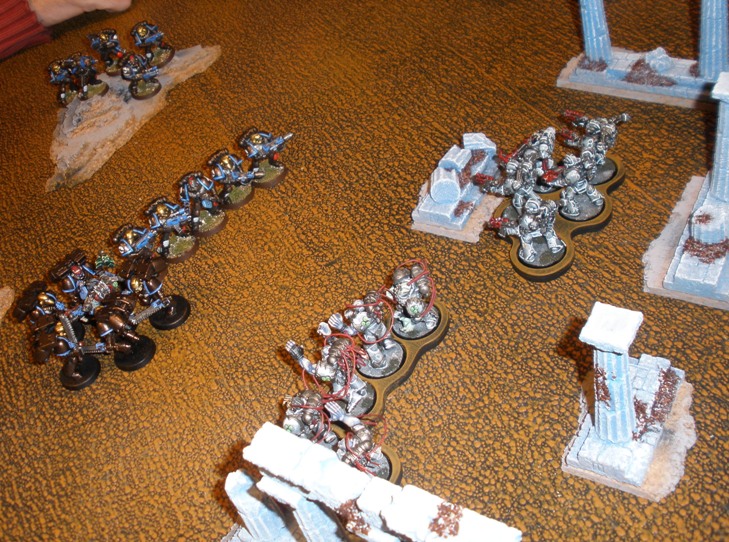
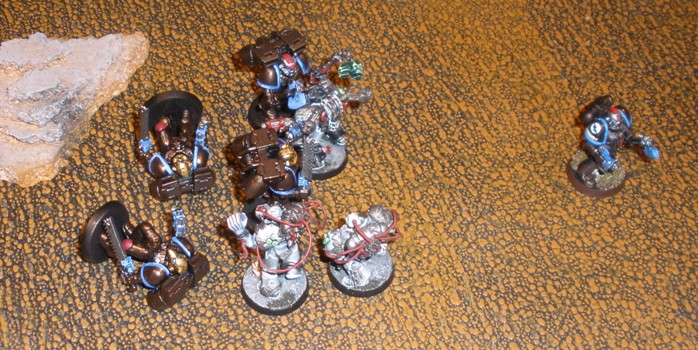
Sgt Klaus (with Klaus played by Brother Bakul in this instalment) is the only surviving member of his squad to reach the loyalist lines, where he begins to make them pay by bludgeoning them with his power weapon.
Chaos firepower almost wipes out a squad of loyalists, while Squad Nemesis is reduced to two survivors from reciprocal shots. Sgt Klaus shrugs off the assault marines attacks against his bloated undead and armoured hide and kills a marine.
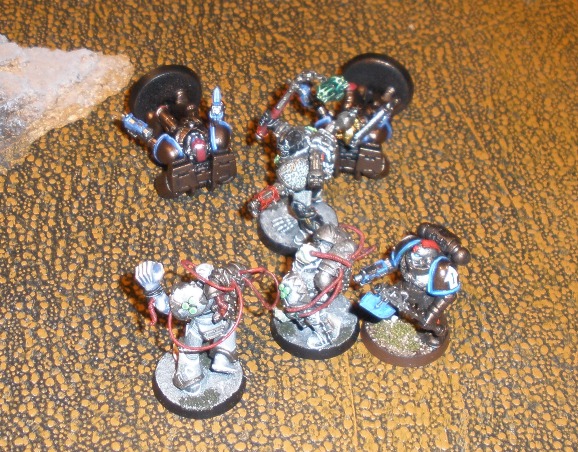
The remnants of Squad Nemesis combine with Sgt Klaus to kill another pair of Assault Marines.
The Tactical Sergeant kills the two Possessed with his power axe but Klaus kills everything in the area including the Tac Sarge. Standing in the open and covered in gore, Klaus screams his defiance at the heavens. Then the Devastators on the hill finally get a target again and blow him into rotting, slimy chunks with heavy weapon fire.
The Loyalists win.
Conclusions:In theory, having a large number of units in a game can provide some redundancy so that odd changes in fortune can either be exploited or countered by units held for such a purpose.
That’s the theory anyway, it never applies to games of 40K as the armies are set up so close together and have been min/maxed in such a way as to render thoughts of tactical or strategic play more or less redundant. It’s a game of point your guys in the direction of the enemy and press “Go”.
This effect is exaggerated by smaller forces like those that we were playing with. That said, that game was essentially a standard game of 40K in microcosm.












 sho3box